
Medically reviewed by Mr Shivram Singh MBBS, FRCSI, FRCS (Plast), Medical Director & Lead,
Medical Advisory Committee for Manchester Private Hospital
Last Reviewed May 25th 2026
This Article Covers:
- Does Breast Reduction Leave Scars?
- Where Are Breast Reduction Scars Usually Located?
- What Do Breast Reduction Scars Look Like at First?
- Breast Reduction Scar Timeline: How Scars Change Over Time
- What Affects How Breast Reduction Scars Heal?
- Breast Reduction Scar Care and Aftercare Tips
- When Should You Be Concerned About Breast Reduction Scars?
- Can Breast Reduction Scars Become Raised or Uneven?
- Will Breast Reduction Scars Fade?
- Questions to Ask at Your Consultation
- Final Thoughts
Worrying about scars is completely normal when you are thinking about breast reduction surgery. For many women, the benefits of lighter, more comfortable breasts feel clear, but questions about healing, scar position and long-term appearance can still feel like a big part of the decision.
The honest answer is that breast reduction scars are an expected part of surgery. Breast reduction involves incisions, so some scarring will always be present. What matters most is understanding where the scars are usually placed, how they tend to heal, what can affect their appearance, and what you can do to support the healing process.
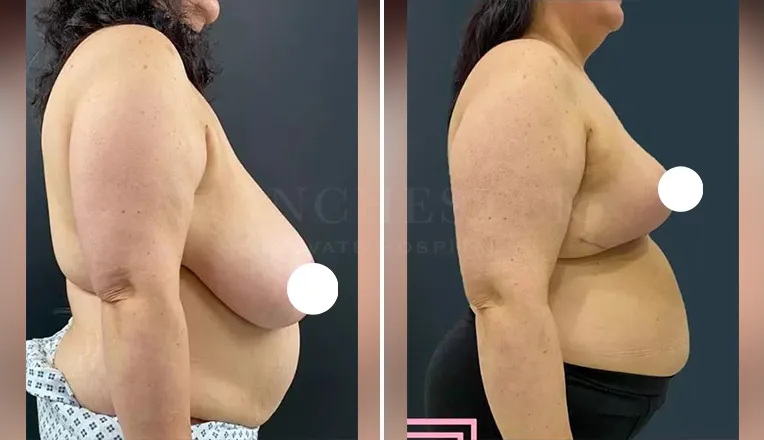
The scar pattern often includes scars around the nipple, a vertical scar down the breast, and sometimes a horizontal scar in the breast crease depending on the technique used.
For most patients, scars improve gradually with time. They do not disappear completely, but they usually become less noticeable as they soften and fade. This guide explains what to expect in a clear and realistic way.
Does Breast Reduction Leave Scars?
Yes, breast reduction leaves scars. Because the surgery removes excess breast tissue, fat and skin, incisions are needed to reshape the breast. The exact scar pattern depends on the type of reduction, the amount of lifting needed and the surgical technique used.
That said, many women feel the trade-off is worthwhile. For patients struggling with heavy breasts, discomfort or practical day-to-day issues, breast reduction can make a major difference to comfort and proportion.
The scars are permanent in the technical sense, but they usually fade over time and often sit in areas covered by bras, underwear and most clothing. Scars may look red or different from your usual skin colour at first, but most fade over time and are usually hidden under normal clothes, bras and bikini tops.
Where Are Breast Reduction Scars Usually Located?
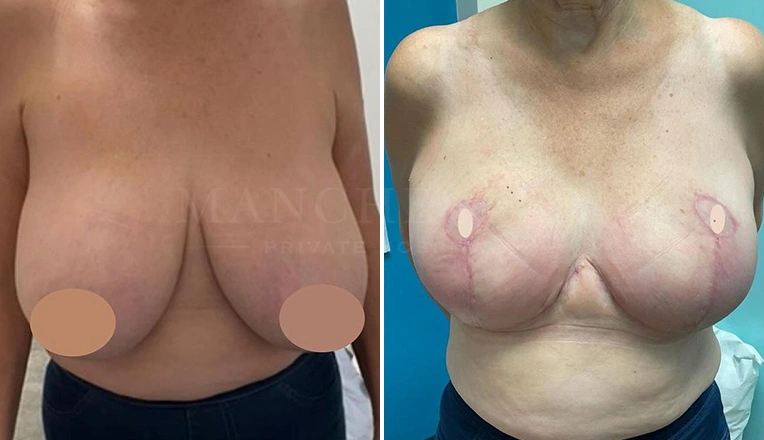
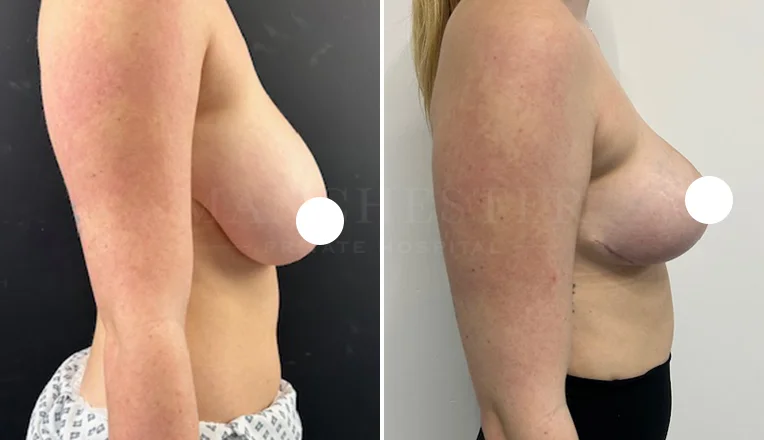
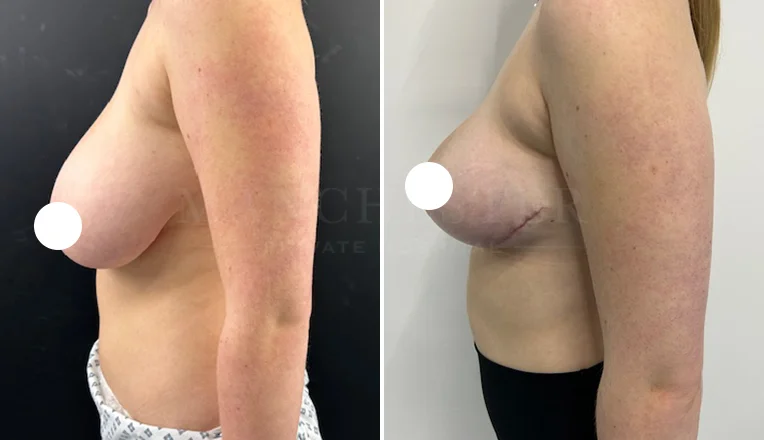
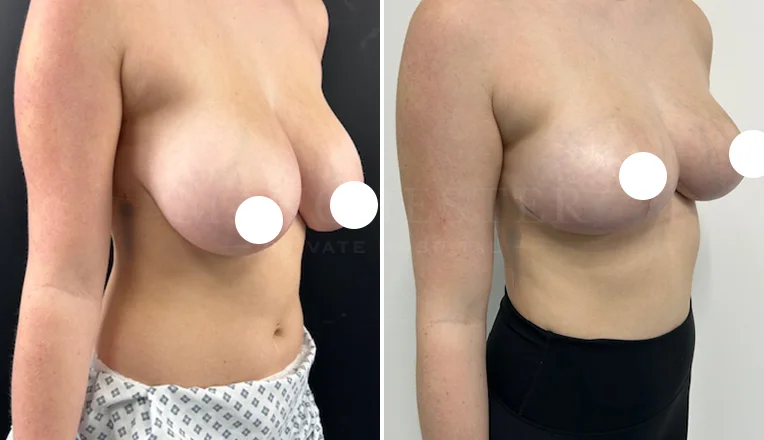
The most common breast reduction scar pattern includes a scar around the edge of the areola, a vertical scar running down from the nipple area, and sometimes a horizontal scar along the breast crease. This is often described as an anchor-shaped pattern. Some patients may only need the scar around the areola and the vertical scar, depending on the operation being performed.
The reason scar patterns vary is simple: not every breast needs the same type of reshaping. A larger reduction or more significant lift often requires more skin removal and more extensive incision lines. In smaller or more selected cases, a shorter scar pattern may be possible. Your surgeon will normally explain the scar pattern most likely for your anatomy and goals during consultation.
What Do Breast Reduction Scars Look Like at First?
In the early stage of healing, scars after breast reduction often look more obvious than patients expect. They may appear red, pink, darker than the surrounding skin, slightly raised or a little firm to the touch. This is a normal part of early scar healing and does not mean something has gone wrong.
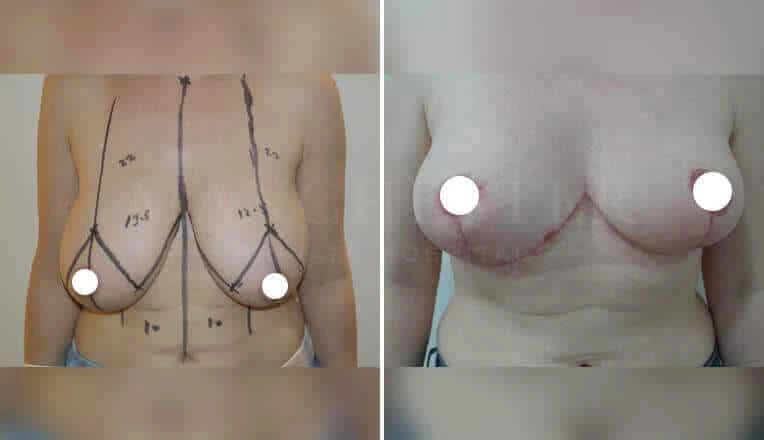
Swelling can also make the breasts and scars look more dramatic in the early weeks. At this stage, the breasts are still settling, tissues are still healing, and the final scar appearance cannot be judged yet. One of the most important things patients can do early on is be patient and avoid assuming that early scar appearance is the finished result.
Breast Reduction Scar Timeline: How Scars Change Over Time
The breast reduction scar timeline is not exactly the same for every person, but there is a general pattern that many patients go through.
In the first few weeks, the scars usually look fresh, more visible and often redder than many patients expect. This is the stage when swelling, bruising and general post-operative healing are still very much part of the picture. Over the following months, scars often begin to soften and become paler. The breasts themselves also continue to settle into a more natural shape.
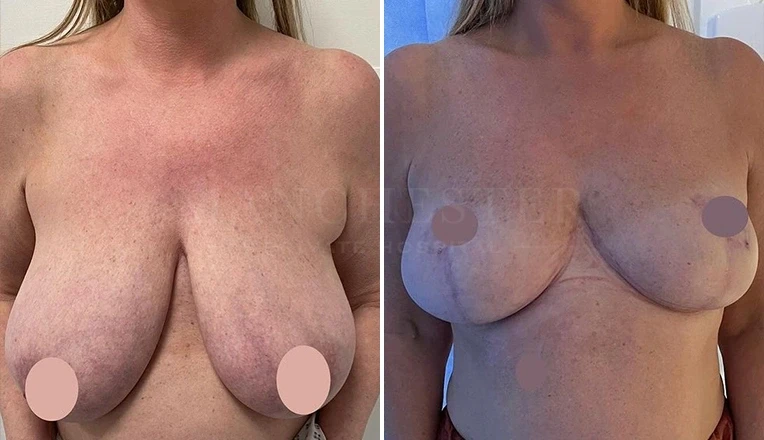
When patients ask about one year breast reduction scars, they are usually asking whether the scars will still be obvious. By around this stage, many scars are flatter, lighter and much less striking than they were at the start, but healing still varies from person to person. Some patients heal with very fine lines, while others may continue to have more visible scarring.
What Affects How Breast Reduction Scars Heal?
There is no single answer to how well breast reduction surgery scars will heal, because several factors play a role. Your natural skin type and healing tendency matter. Genetics matter too. Some people naturally form flatter, finer scars, while others are more prone to thicker or more noticeable scarring.
Smoking can also affect healing. So can wound healing problems, infection, tension on the scar line, and how closely aftercare instructions are followed.
The size and complexity of the reduction can influence scar healing as well. Larger reductions may place more stress on healing tissues, and certain junction points in the scar pattern can be more vulnerable during recovery.
Breast Reduction Scar Care and Aftercare Tips
Good aftercare can make a real difference to how breast reduction scars settle over time. The most important step is to follow your clinic’s wound care advice carefully, especially in the first stage of healing. This includes keeping dressings and wounds as advised, avoiding unnecessary strain, and attending follow-up appointments.
Once the skin is fully healed and your team says it is safe, scar care may include moisturising, gentle massage and protecting the area from the sun.
Support garments also matter. Wearing the bra or support garment recommended by your clinic can help reduce strain on the healing tissues. Just as importantly, try not to rush back into activities that pull on the chest too early. Healing is not only about the skin surface — the deeper tissues need time too.
When Should You Be Concerned About Breast Reduction Scars?
Some redness, firmness and visible healing are normal. But you should seek advice if the wound or scar becomes increasingly red rather than gradually settling, if there is discharge, a bad smell, fever, worsening pain, or if part of the wound opens instead of healing.
These can point to wound healing problems or infection, and they are worth checking sooner rather than later.
It is also worth getting advice if a scar later becomes very thick, very raised or increasingly uncomfortable. Not every uneven scar means there is a serious problem, but it is sensible to have concerns reviewed.
Can Breast Reduction Scars Become Raised or Uneven?
Yes, they can. Some scars may stretch, thicken or heal less neatly than others. This does not always mean anything has gone wrong, but it is one reason expectation-setting matters before surgery. Even with good healing, scars are not always perfectly identical from one side to the other.
Scar asymmetry is common and that scar shape, length and position can differ between the right and left breasts. It also notes that scars may occasionally become more noticeable.
For many patients, the main point is not whether scars are mathematically perfect, but whether the overall result feels worthwhile, comfortable and in proportion.
Will Breast Reduction Scars Fade?
In most cases, yes, they do fade. They usually become softer, flatter and paler over time. What they do not do is vanish completely. A scar is permanent, but its long-term appearance is usually very different from how it looked in the early weeks. Breast reduction scars commonly improve with time, even though they remain present.
This is why patience is such an important part of recovery. Looking at scars too early can make them feel more dramatic than they are likely to be in the long run.
Questions to Ask at Your Consultation
If scar concerns are high on your list, it is worth asking direct questions at consultation. You may want to ask what scar pattern is most likely in your case, whether you are likely to have a vertical or anchor-shaped scar, how long healing usually takes, what aftercare is recommended, and what you should do if a scar later becomes raised or uneven.
These questions can make the decision feel much more informed and help you understand what is realistic for your body rather than relying on general assumptions.
Final Thoughts
Breast reduction scars are a normal part of surgery, and it is completely reasonable to ask about them before making a decision. The good news is that while scars are expected, they usually improve over time and often become much less noticeable than patients fear at the start
The best way to understand what is likely in your own case is through a proper consultation. That conversation should help you understand not just where the scars may be, but how they are expected to heal, what aftercare will involve, and what kind of result is realistic for you.
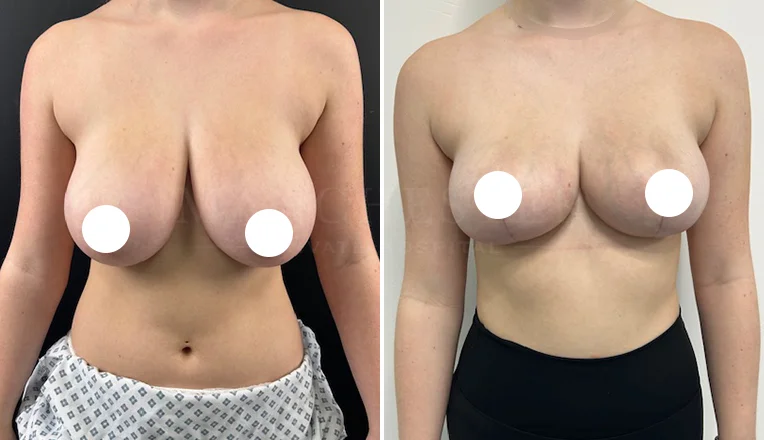
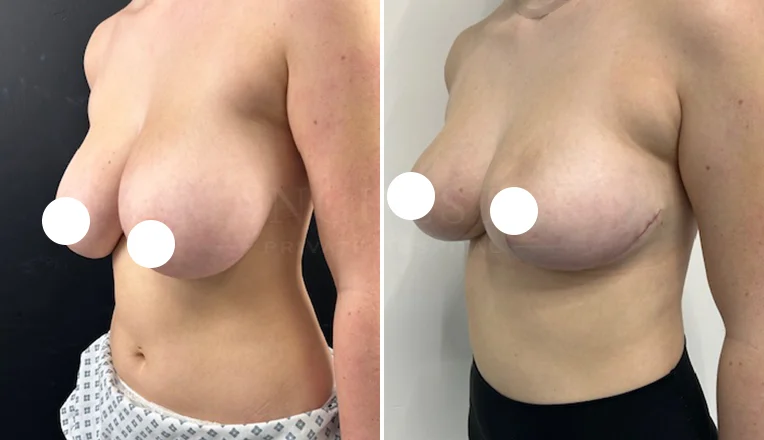
Breast Reduction Before and After Gallery
Read Our Patient Reviews
Explore our reviews made by real patients
Meet Our Expert Surgeons
Get to know our highly experienced surgeons
Consultation Locations
We offer Consultations from a number of locations around the UK
Prices and finance
We have partnered with Chrysalis Finance, allowing patients to apply for cosmetic surgery finance for all our procedures

Related Articles





Consultation Locations
Manchester Hospital
Manchester Private Hospital New Court, Regents Place, Windsor
Street Salford, Greater Manchester, M5 4HB.