
Medically reviewed by Mr Shivram Singh MBBS, FRCSI, FRCS (Plast), Medical Director & Lead,
Medical Advisory Committee for Manchester Private Hospital
Last Reviewed April 17th 2026
This Article Covers:
- Does Vaser Liposuction Leave Scars?
- Where Are Vaser Liposuction Scars Usually Placed?
- How Big Are Vaser Liposuction Scars?
- What Do Vaser Liposuction Scars Look Like at First?
- How Long Do Vaser Liposuction Scars Take to Heal?
- What Affects How Well Vaser Liposuction Scars Fade?
- Vaser Liposuction Scar Aftercare Tips
- When Should You Worry About a Liposuction Scar?
- Can Anything Be Done if a Vaser Liposuction Scar Heals Poorly?
- Frequently Asked Questions About Vaser Liposuction Scars
- Thinking About Vaser Liposuction?
If you are thinking about Vaser Liposuction, it is completely normal to have questions about scarring. For many patients, this is one of the biggest concerns before treatment. People often want to know whether scars will be obvious, where they will be placed, how long they take to fade, and whether there is anything they can do to support good healing.
The reassuring news is that Vaser Liposuction scars are usually small because the procedure is performed through small incision points rather than large surgical cuts.
However, it is still important to understand that any procedure involving incisions can leave scars. The goal is not to promise scar-free surgery, but to explain what is realistic, what affects healing, and how aftercare can help scars settle as well as possible.
In this guide, we explain where Vaser lipo scars are usually placed, what early healing normally looks like, how scars tend to change over time, and what you can do to support the healing process.
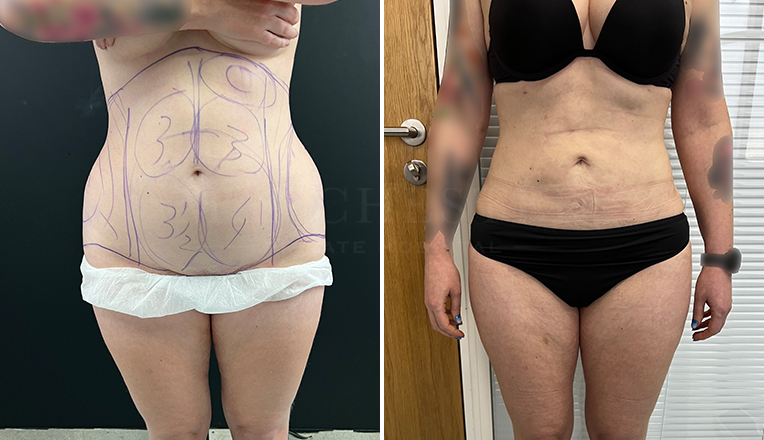
Vaser Liposuction on Abdomen & Back | 10 weeks post op
Does Vaser Liposuction Leave Scars?
Yes, Vaser Liposuction leaves scars, because the procedure requires small incisions to allow the surgeon to access the treatment area and remove fat. These scars are usually much smaller than the scars associated with more invasive procedures that involve larger cuts or removal of skin.
For most patients, the scars are a worthwhile trade-off for the contour improvement they are hoping to achieve. That said, every person heals differently. Some scars settle quickly and become faint over time, while others remain more visible for longer.
Skin type, genetics, aftercare, the treated area, and your body’s own healing response can all influence how noticeable scars are in the long term. The important thing is to go into treatment with realistic expectations. VASER liposuction scars are usually small, but they are still part of the healing journey.
Where Are Vaser Liposuction Scars Usually Placed?
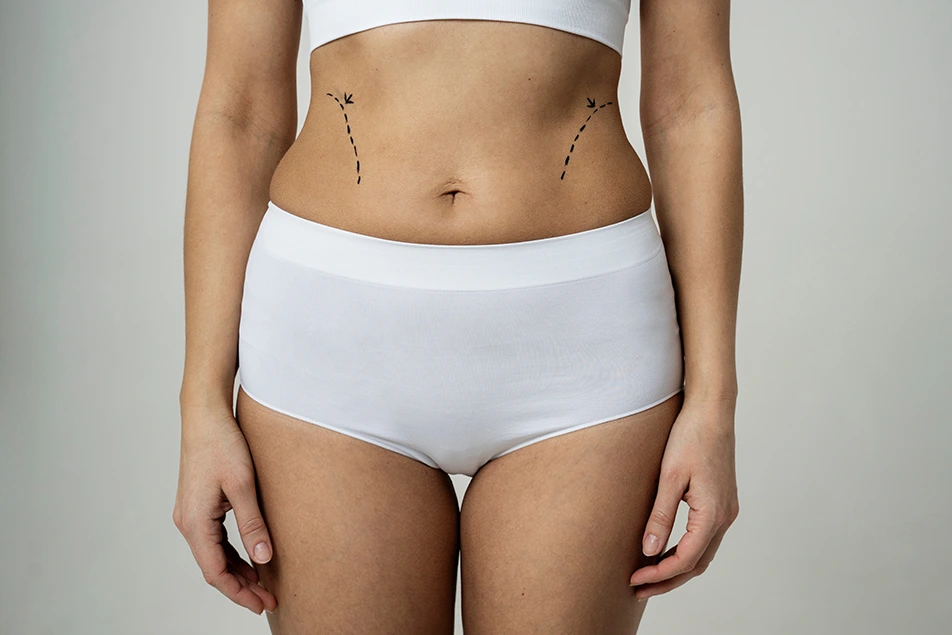
One of the most common questions patients ask is where the scars will actually be. In most cases, the incision points are placed in areas that are intended to be as discreet as possible. This may include natural skin folds, less visible parts of the body, or areas where the small scar can blend in more easily once healed.
The exact placement depends on the body area being treated. For example, incision points for abdominal contouring may be positioned differently from those used for the arms, thighs, chest or chin.
The surgeon’s aim is to place them where they allow safe and effective access while also helping keep the final scars as inconspicuous as possible. This is why scar placement is not exactly the same for every patient. It is tailored to the treatment area and the surgical plan.
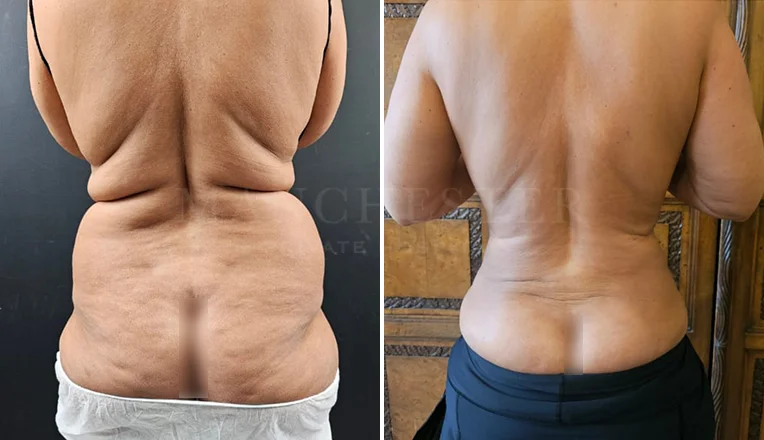
Vaser Liposuction on Abdomen & Flanks | 3 months post op
How Big Are Vaser Liposuction Scars?
In most cases, Vaser Liposuction scars are small because the procedure is performed through small access points. Although the scars are generally minimal in size, it is important not to assume that small means invisible straight away.
Early scars can still look red, slightly raised, or more noticeable than patients expect in the first stage of healing. This is normal.
Scar appearance changes over time, and what you see in the early weeks is not the final result. The size of the scar may be small, but the healing process still takes time.
What Do Vaser Liposuction Scars Look Like at First?
Straight after surgery and in the early stages of healing, scars often look more obvious than they eventually will. Fresh scars may appear pink, red, slightly firm, or mildly raised.
You may also have bruising and swelling around the treatment area, which can temporarily draw more attention to the incision points. This early appearance can worry some patients, especially if they were expecting the scars to look faint straight away.
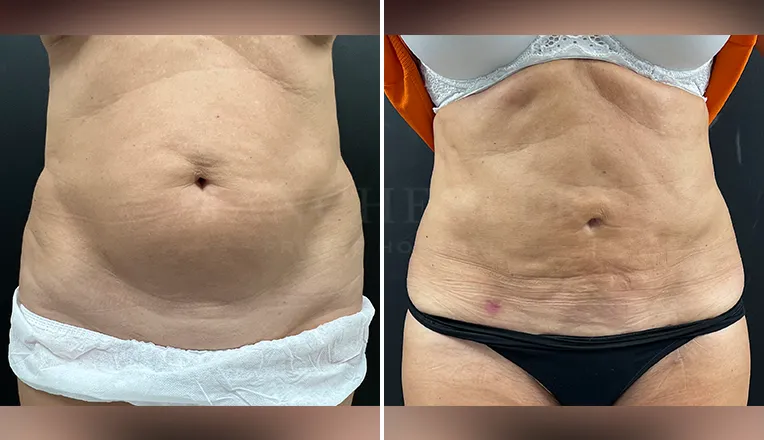
Vaser Liposuction on Abdomen & Flanks | 10 weeks post op
In reality, it is very common for scars to look more noticeable before they begin to soften and fade. Bruising and swelling are also normal after liposuction and can affect how the whole area looks during early recovery.
At this stage, patience is important. The body is still healing, and scar maturation takes much longer than the initial wound closure.
How Long Do Vaser Liposuction Scars Take to Heal?
There is an important difference between the skin healing over and the scar fully maturing. The incision sites themselves usually heal in the early weeks, but the scar continues to change for much longer than that.
In the first few weeks, the focus is on wound healing. During this period, it is especially important to follow the advice given by your clinic, keep the area clean as instructed, and watch for anything that does not seem to be healing properly.
Surgical wound infection risk is usually highest in the early healing period, often within the first two to three weeks. Over the following months, scars often continue to soften, flatten and fade. Some patients notice steady improvement over a long period, rather than a sudden change.
Final scar appearance varies, and some people naturally heal with finer scars than others. Scar improvement is usually gradual, which is why realistic expectations matter.
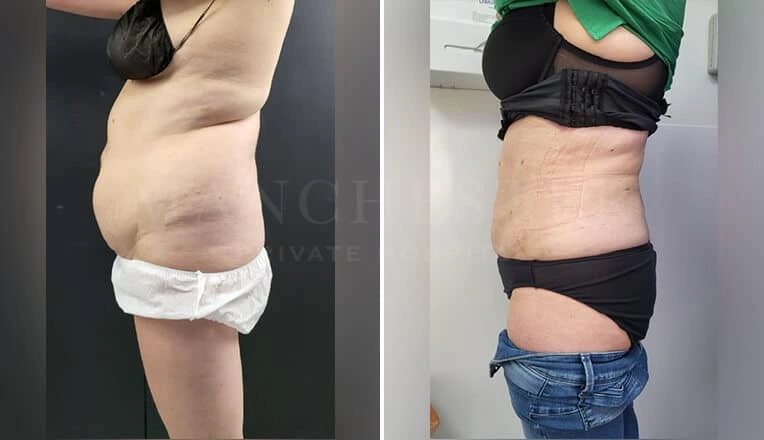
Vaser Liposuction on Abdomen & Flanks | 10 weeks post op
What Affects How Well Vaser Liposuction Scars Fade?
Scar healing is not the same for everyone. Several factors can affect how Vaser lipo scars settle over time.
One major factor is your own skin and healing response. Some people naturally heal very well, while others are more prone to noticeable or raised scars. Genetics can play a role here. The part of the body treated also matters, because some areas heal more favourably than others.
Aftercare is another important factor. Following the instructions given by your surgeon, avoiding unnecessary friction, and protecting healing scars from the sun can all help support better scar recovery.
Smoking can also affect healing, which is one reason patients are often advised to stop before and after surgery. Sun exposure is another factor because immature scars can darken more easily.
Infection or delayed healing can also affect the final scar, which is why it is important to seek advice early if something does not seem right.
Vaser Liposuction Scar Aftercare Tips
Good aftercare does not guarantee an invisible scar, but it can help support better healing. Looking after incision sites properly is an important part of recovery.
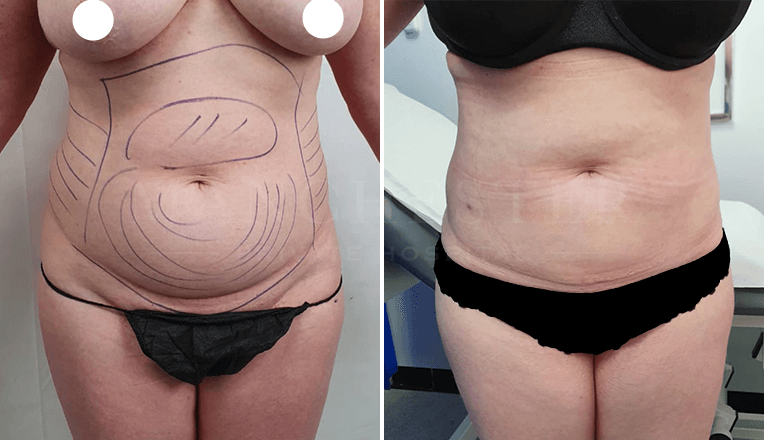
Vaser Liposuction on Abdomen & Flanks | 10 weeks post op
Follow Your Surgeon’s Wound Care Instructions
This is the most important first step. Your clinic will tell you how to care for the incision points, when to change dressings if needed, and what signs to look out for during healing. Following this advice closely helps reduce unnecessary problems and supports the healing process.
Wear Compression Garments as Advised
Compression garments are a routine part of liposuction recovery and may help support the tissues while swelling settles. They are mainly used for recovery and contour support, but they can also play a role in helping the treated area heal in a controlled way.
Avoid Picking, Scratching or Rubbing the Area
As the incisions heal, the skin may feel itchy or irritated. It is important not to pick at scabs or rub healing scars, as this can interfere with recovery and potentially worsen the final appearance.
Protect Healing Scars from the Sun
Fresh scars are more vulnerable to pigmentation changes and can darken if exposed to sunlight. Protecting the area is an important part of scar care, especially in the early months of healing.
Only Start Scar Massage Once the Skin Has Fully Healed
Some patients are advised about scar massage later in recovery, but this should only start once the wound is fully healed. Guidance from Cambridge University Hospitals notes this is usually around four weeks, not while the wound is still open or fragile.
Attend Follow-Up Appointments
Follow-up checks allow your clinic to monitor healing and spot any concerns early. They are an important part of aftercare and give you the opportunity to ask questions about recovery, swelling and scar appearance.
When Should You Worry About a Liposuction Scar?
Some redness, mild firmness and early visibility are normal. However, there are times when you should contact your clinic for advice.
You should seek guidance if the area becomes increasingly red rather than gradually settling, if pain is getting worse instead of better, if there is heat, discharge, an unpleasant smell, fever, or if a wound appears to be opening rather than healing. These can be signs that the area needs review.
Later on, some patients may notice a scar becoming unusually raised or thickened. Certain scars can become hypertrophic or, less commonly, keloid, and these may need clinical advice rather than home treatment alone.
The key message is simple: if something does not seem normal or recovery is not progressing as expected, it is always better to ask your clinic.
Can Anything Be Done if a Vaser Liposuction Scar Heals Poorly?
In many cases, scars improve significantly with time, even if they look more noticeable than expected in the early months. If a scar remains raised, red, uncomfortable or cosmetically bothersome, the right next step depends on the type of scar and how it has healed.
Some patients may be advised about scar massage or topical scar care once healing is complete. Others may need the scar reviewed more formally if it appears hypertrophic or problematic.
This is not something to self-diagnose. If you are concerned about how a scar is healing, it is best to speak to your surgeon or clinic so they can assess it properly and guide you on the most appropriate next step.
Frequently Asked Questions About Vaser Liposuction Scars
Where are Vaser Liposuction scars usually placed?
They are usually placed in discreet areas where possible, but the exact position depends on the body area being treated and the surgical plan.
Does Liposuction leave permanent scars?
Yes, any incision can leave a scar. However, Liposuction scars are usually small and often become less noticeable over time.
How long do Vaser Liposuction scars take to fade?
The wounds usually heal in the early weeks, but scars can continue maturing and fading for months afterwards.
Can Vaser lipo scars become raised?
Yes, some scars can become raised or thicker than expected, particularly in people prone to hypertrophic or keloid scarring.
When can I start a scar massage after liposuction?
Scar massage should only begin once the wound is fully healed. Guidance from Cambridge University Hospitals says this is usually around four weeks.
Do compression garments help after liposuction?
Compression garments are a standard part of liposuction recovery and are commonly advised to support healing and swelling control.
Can the sun make liposuction scars darker?
Yes, healing scars can darken more easily with sun exposure, which is why protection is important.
Thinking About Vaser Liposuction?
If you are considering VASER liposuction in Manchester and want honest advice about scarring, healing and aftercare, it is worth discussing your concerns at consultation.
At Manchester Private Hospital, patients are guided through what to expect before treatment, during recovery and as scars mature over time. Understanding the reality of VASER liposuction scars can help you make a more informed, confident decision about whether treatment is right for you.
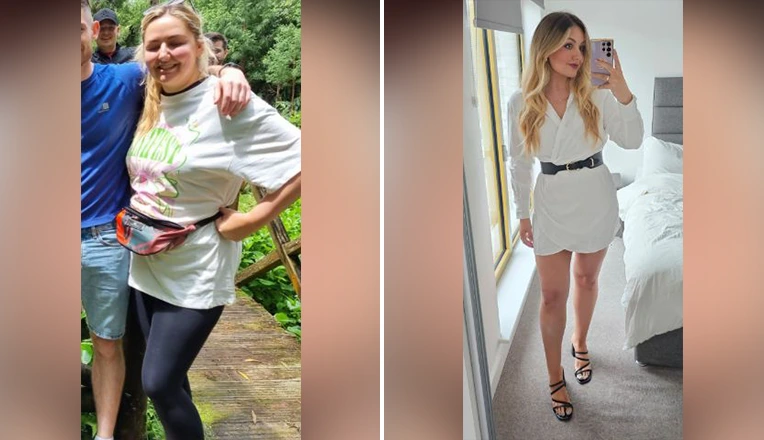
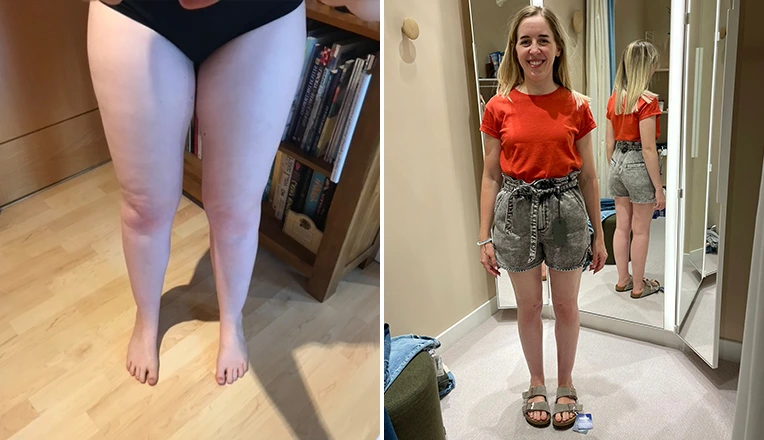
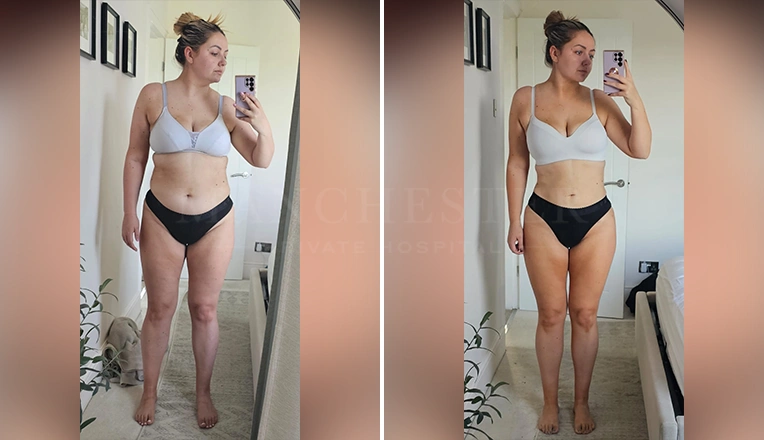
Vaser Liposuction Before and After Gallery


Read Our Patient Reviews
Explore our reviews made by real patients
Meet Our Expert Surgeons
Get to know our highly experienced surgeons
Consultation Locations
We offer Consultations from a number of locations around the UK
Prices and finance
We have partnered with Chrysalis Finance, allowing patients to apply for cosmetic surgery finance for all our procedures
Related Articles





Consultation Locations
Manchester Hospital
Manchester Private Hospital New Court, Regents Place, Windsor
Street Salford, Greater Manchester, M5 4HB.