
Medically reviewed by Mr Shivram Singh MBBS, FRCSI, FRCS (Plast), Medical Director & Lead,
Medical Advisory Committee for Manchester Private Hospital
Last Reviewed December 2nd 2025
This Article Covers:
- What Is Gynecomastia?
- Early Signs of Gynecomastia in Men
- Gynecomastia vs Chest Fat: How to Tell the Difference
- When Should You See a Specialist?
- What Causes Gynecomastia?
- Understanding Gynecomastia Grades
- How Gynecomastia Is Diagnosed at Manchester Private Hospital
- Treatment Options for Gynecomastia
- Gynecomastia Surgery Results – What to Expect
- Why Choose Manchester Private Hospital?
- Frequently Asked Questions
- Book a FREE Consultation
Gynecomastia — enlargement of the male breast gland — is far more common than most men realise. It affects boys during puberty, adults in their 20s and 30s, and even older men as hormones naturally change. For many, it starts subtly, with small changes that can be easy to miss.
At Manchester Private Hospital, we see hundreds of men each year who come to us unsure whether what they’re experiencing is normal chest fat or a sign of gynecomastia. Understanding the early symptoms can help you take action sooner, avoid worsening discomfort, and feel more in control of your body.
This guide explains the earliest signs of gynecomastia, how to tell the difference from chest fat, when to seek help, and what treatment options are available.
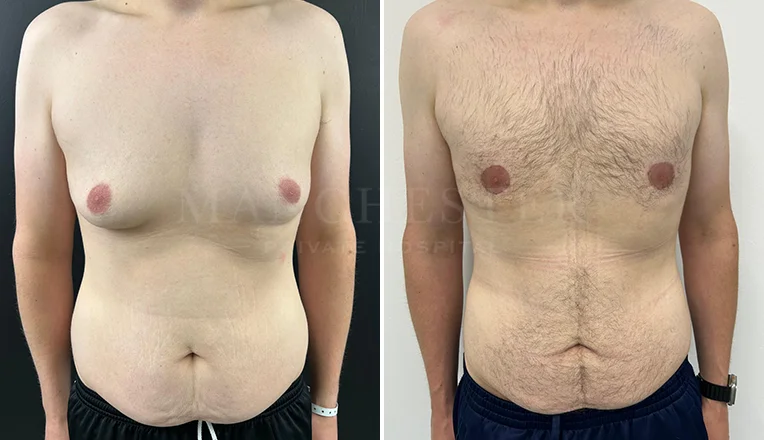
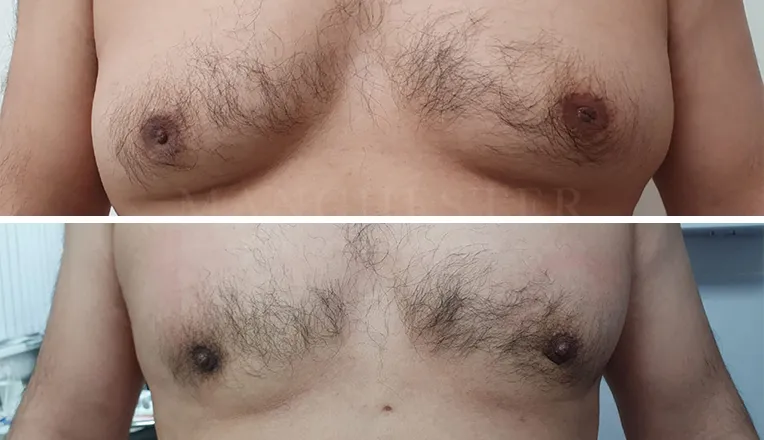
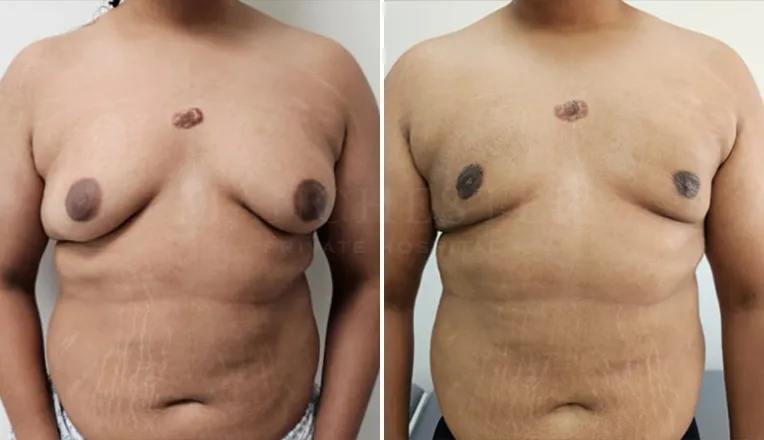
Gynecomastia | 3 months post op
What Is Gynecomastia?
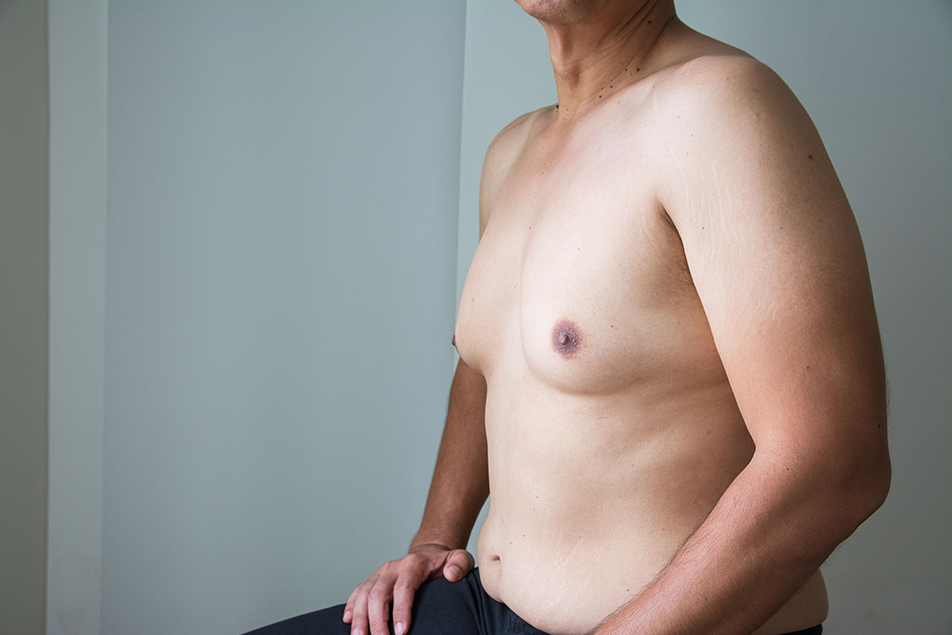
Gynecomastia is the growth of firm glandular breast tissue in men. It happens when there is an imbalance between oestrogen and testosterone — either temporary or long-term.
This tissue is different from fat. It feels firmer, sits directly behind the nipple, and does not go away with exercise or dieting.
Gynecomastia can be caused by:
- Hormonal fluctuations
- Puberty
- Ageing
- Weight changes
- Medication or steroid use
- Certain medical conditions
Although it can be worrying, the condition is common, harmless, and treatable.
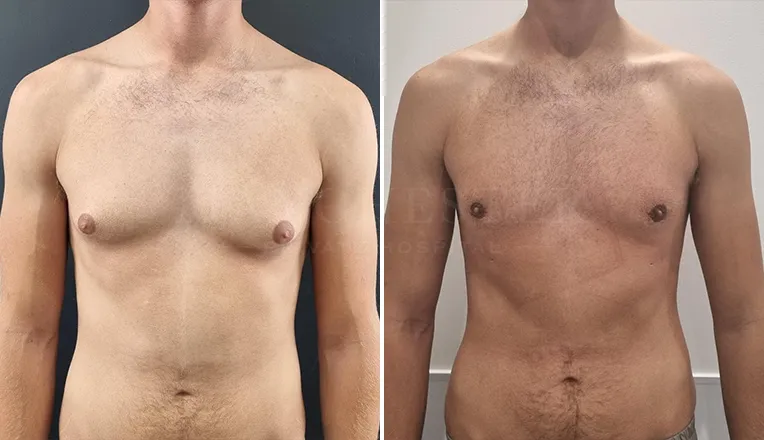
Early Signs of Gynecomastia in Men
1. Swelling or Firm Lump Beneath the Nipple
One of the earliest and most noticeable signs is a firm lump or disc-shaped mass directly beneath the nipple.
It can:
- Feel rubbery or solid
- Be tender or sore
- Appear on one or both sides
This lump is gland tissue — not fat — and is the key indicator of gynecomastia.
2. Nipple Sensitivity or Soreness
Many men experience:
- Nipple tenderness
- A dull ache
- Discomfort when touched or bumped
This sensitivity happens because the gland tissue is developing or becoming inflamed.
3. Puffiness or Changes Around the Nipple (Areola)
The chest may start to look:
- Puffy
- Rounded
- Fuller directly behind the nipple
This can be the first visual cue men notice, especially in tight clothing or during exercise.
4. Uneven Chest or One-Sided Fullness
Gynecomastia does not always appear equally on both sides.
A common early sign is:
- One nipple looking fuller
- One side protruding more
- A slightly asymmetrical chest
Left untreated, the difference can become more obvious over time.
5. Firm Tissue, Not Soft Fat
A key difference:
Gyno = firm gland.
Fat = soft and squashy.
If your chest feels harder directly under the nipple, or you can feel a circular disc-shaped lump, this is often early gynecomastia.
6. Unexplained Increase in Chest Size
If your chest starts looking “fuller” without weight gain, or despite dieting and training, this may be an early sign. This growth is caused by gland tissue, which does not shrink through exercise.
Gynecomastia vs Chest Fat: How to Tell the Difference
Many men — especially gym-goers — confuse gynecomastia with chest fat (“pseudo-gyno”).
Here’s how to differentiate:
| Gynecomastia | Chest Fat |
|---|---|
| Firm / rubbery lump behind the nipple | Soft, spread-out fat |
| Puffiness at the nipple | Fat evenly spread across chest |
| Often sensitive or sore | Usually painless |
| Doesn’t improve with exercise | Improves with fat loss |
| Circular disc under nipple | No defined lump |
If you’re unsure, a specialist consultation at MPH can confirm the difference quickly and discreetly.
For a deeper explanation of how gland tissue differs from fat — including expert insights from Mr Faisal Ashfaq — read our full guide on Gynecomastia vs Chest Fat.
When Should You See a Specialist?
You should book a consultation if you notice:
- A lump that persists more than a few months
- Ongoing tenderness or pain
- One breast looking much larger than the other
- Growing embarrassment or impact on confidence
- Difficulty wearing fitted T-shirts
- No improvement after weight loss
If symptoms worsen or if there’s nipple discharge, an immediate medical review is recommended.
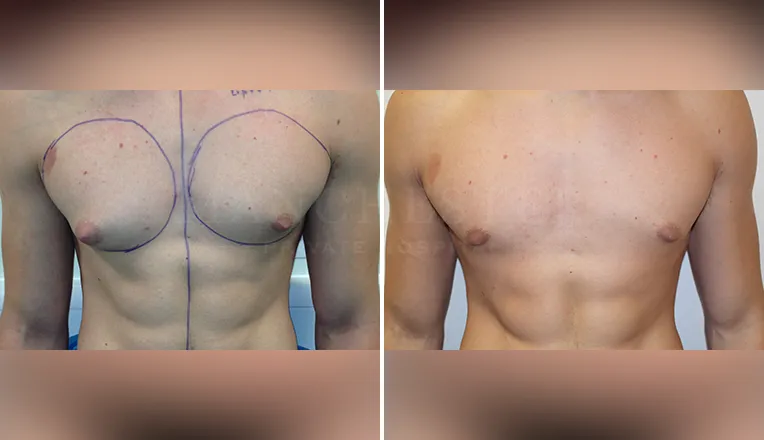
What Causes Gynecomastia?
Early gynecomastia often begins because of:
- Hormonal imbalance (common in puberty and older age)
- Weight gain that triggers hormonal shifts
- Steroid or drug use (including anabolic steroids)
- Medications such as antidepressants, anti-androgens, or heart drugs
- Thyroid or liver conditions
Identifying the cause helps guide your treatment plan.
Understanding Gynecomastia Grades
Doctors classify the condition using the gynecomastia grade system:
Grade 1 – Small enlargement, slight puffiness, no skin excess.
Grade 2 – Moderate enlargement, may show more obvious swelling around the nipple.
Grade 3 – More noticeable projection, additional fat, and mild skin excess.
Grade 4 – Significant enlargement resembling female breast tissue, with loose skin.
Early signs almost always fall into Grade 1 or Grade 2.
How Gynecomastia Is Diagnosed at Manchester Private Hospital
During your assessment, one of our GMC-registered surgeons will:
- Examine the chest
- Distinguish gland tissue from fat
- Review medical history
- Rule out underlying conditions
- Recommend the most appropriate treatment
In some cases, an ultrasound may be offered to confirm the diagnosis.
Treatment Options for Gynecomastia
1. Lifestyle or Medical Review
Early pubertal gynecomastia can resolve naturally.
However, adult gynecomastia rarely improves without treatment.
2. Gynecomastia Surgery (Male Chest Reduction)
Surgery is the only permanent solution for removing breast gland tissue.
At MPH, procedures typically include:
- Gland excision to remove firm breast tissue
- Liposuction to contour surrounding fat
- Combination surgery for athletic, natural-looking results
Our surgeons specialise in creating a flatter, firmer, masculine chest shape with minimal scarring.
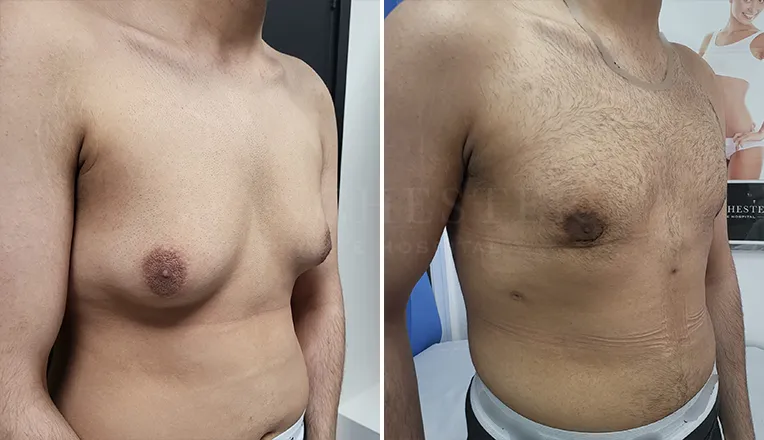
Gynecomastia Surgery Results – What to Expect
Patients generally experience:
- A flatter, more defined chest
- Permanent removal of gland tissue
- Improved self-confidence
- Better posture and clothing fit
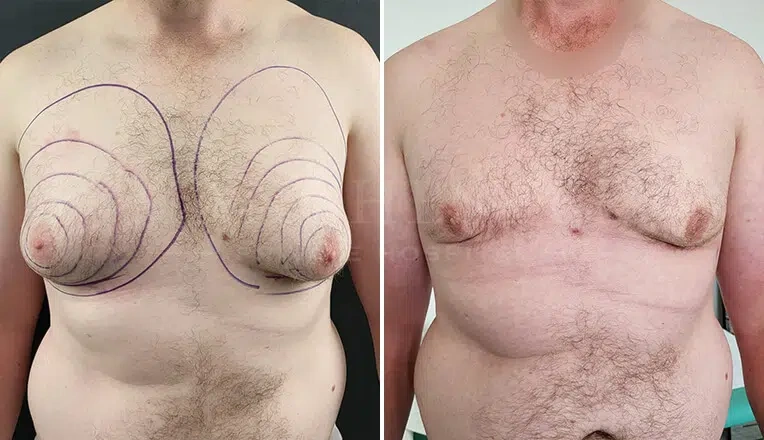
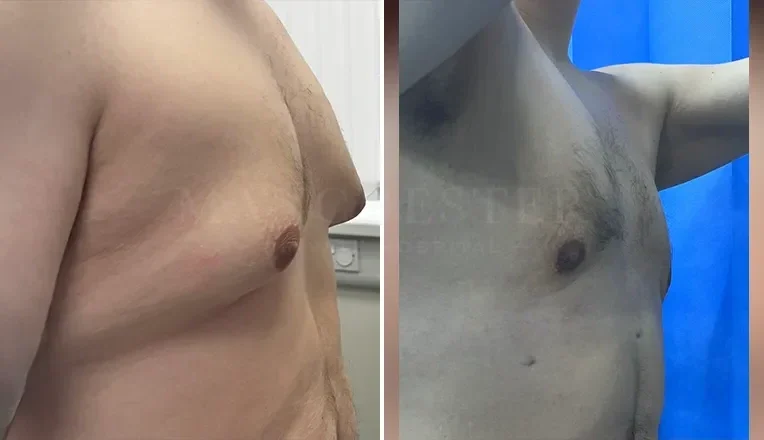
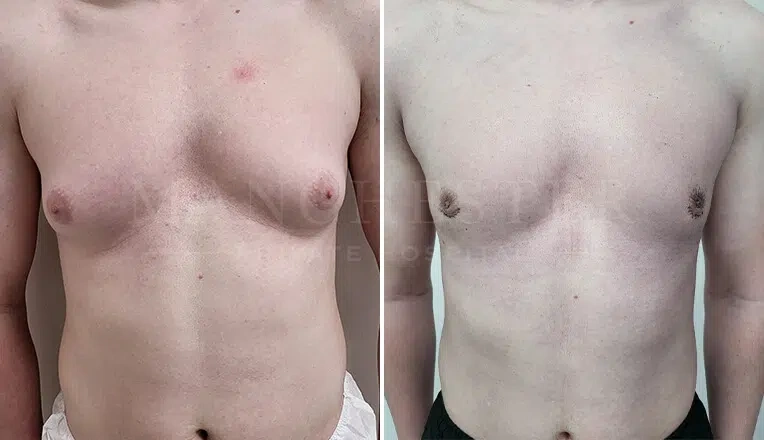
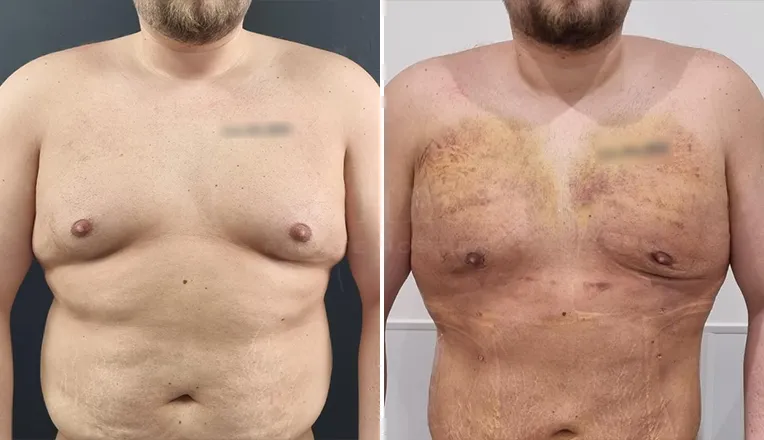
For examples, visit our Gynecomastia Before & After Gallery, which shows real patient outcomes.
Why Choose Manchester Private Hospital?
- Experienced GMC-registered surgeons
- Specialists in male chest reduction
- Thousands of successful cases
- Modern, CQC-approved surgical facilities
- Discreet consultations with male-focussed care
- Transparent pricing with finance options
- 1575+ Trustpilot Reviews
Frequently Asked Questions
Are male chest lumps always gynecomastia?
Not always — specialist assessment confirms the cause.
What does early gyno feel like?
A firm lump behind the nipple, often with tenderness.
Can early gynecomastia go away naturally?
Pubertal gyno can resolve within months, but adult gynecomastia rarely improves without treatment.
Will exercise or diet fix it?
No. Gland tissue cannot be reduced through exercise.
Is it painful?
Early gynecomastia is often tender but not usually severe.
Can both sides be affected differently?
Yes — uneven gynecomastia is very common.
How long do early symptoms last?
Depending on the cause, symptoms may remain stable or progress over time.
Which gynecomastia grade requires surgery?
Grades 1–4 may require surgery depending on symptoms and gland size.
Book a FREE Consultation
If you’ve noticed early signs of gynecomastia and want clarity or treatment options, our team is here to help.
📞 Call us on 0161 507 8822 or Book a free private consultation online
Feel confident again with support from the specialists at Manchester Private Hospital.
Gynecomastia Before and After Gallery
Read Our Patient Reviews
Explore our reviews made by real patients
Meet Our Expert Surgeons
Get to know our highly experienced surgeons
Consultation Locations
We offer Consultations from a number of locations around the UK
Prices and finance
We have partnered with Chrysalis Finance, allowing patients to apply for cosmetic surgery finance for all our procedures

Consultation Locations
Manchester Hospital
Manchester Private Hospital New Court, Regents Place, Windsor
Street Salford, Greater Manchester, M5 4HB.