This Article Covers:
- Surgery Is Only the Beginning of the Recovery Journey
- Understanding How Scars Change During Healing
- Why Post-Operative Instructions Matter
- The Emotional Side of Cosmetic Surgery Recovery
- Speaking Up When Something Does Not Feel Right
- How MPH Supports Patients After Surgery
- Aftercare Should Be Considered Before Surgery, Not Afterwards
- A Partnership Between Patient and Clinical Team
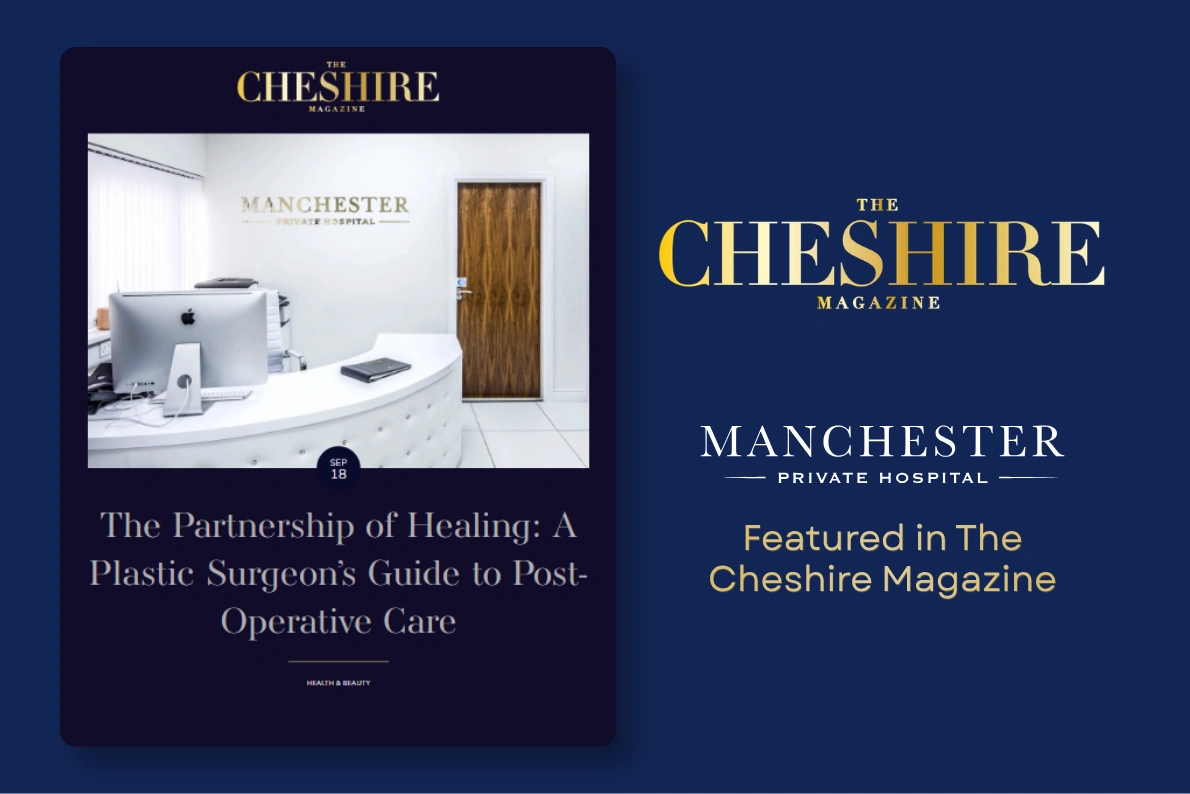
Manchester Private Hospital has been featured in The Cheshire Magazine in an article exploring one of the most important parts of the cosmetic surgery journey: what happens after the operation.
Titled “The Partnership of Healing: A Plastic Surgeon’s Guide to Post-Operative Care”, the feature is written by Mr Singh, Consultant Plastic Surgeon at Manchester Private Hospital. It looks beyond the procedure itself to explain why recovery, aftercare and ongoing communication between patients and their clinical team can play such an important role in healing.
For patients considering cosmetic surgery, it is a useful reminder that surgery is not simply a single event. The operation may be the most visible part of the journey, but healing continues for weeks and months afterwards, and following personalised post-operative advice remains an important part of the process.
Surgery Is Only the Beginning of the Recovery Journey
It is understandable for patients to focus heavily on the day of surgery. Before treatment, many questions naturally centre around the procedure itself: what will happen in theatre, what the result may look like, how long surgery will take and when normal activities can resume.
The Cheshire Magazine feature makes an important point: recovery should be viewed as a partnership between the patient and the clinical team rather than simply a waiting period after surgery.
Healing is gradual, and different tissues recover at different rates. The article explains that although the skin surface may heal relatively quickly, deeper tissue changes and scar maturation can continue for considerably longer.
This is why patients should avoid judging their final result too early. Swelling, bruising, firmness, temporary asymmetry and visible scars can all affect how an area looks during the early stages of recovery.
Understanding How Scars Change During Healing
Scarring is a normal consequence of surgical incisions, but scars do not remain unchanged after surgery.
Mr Singh explains in the feature that scars can initially appear red, raised or firm before gradually changing as the tissue matures. Where appropriate and once wounds have healed sufficiently, patients may be given guidance about scar care as part of their individual recovery plan.
Every person heals differently. Skin type, genetics, the type of operation, incision location and individual healing response can all influence the eventual appearance of a scar.
For this reason, scar care should not be based on generic online advice. Patients should follow the instructions given by their surgeon and clinical team and raise concerns if a scar becomes particularly raised, uncomfortable or slow to settle.
Why Post-Operative Instructions Matter
After surgery, patients may be advised to follow specific restrictions or recovery protocols. These can vary considerably according to the procedure performed.
The Cheshire Magazine article highlights examples such as prescribed compression garments, sleeping in a particular position and avoiding heavy lifting or strenuous activity while tissues are still healing.
These instructions are not simply recommendations for convenience. They form part of the treatment plan designed to help protect healing tissues and reduce avoidable strain during recovery.
Depending on your procedure, post-operative guidance may cover areas such as:
- wound and dressing care;
- compression garments;
- medication;
- sleeping position;
- walking and gentle movement;
- returning to work;
- driving;
- exercise and lifting;
- showering and bathing;
- follow-up appointments.
The exact advice will depend on your surgery and individual circumstances, so patients should follow the instructions provided specifically to them.
The Emotional Side of Cosmetic Surgery Recovery
Recovery is not purely physical.
The feature also discusses the emotional changes that can occur after an operation. Early swelling, bruising, temporary changes in shape or uncertainty about healing can understandably make some patients feel anxious during the first few weeks.
This is one of the reasons realistic expectations before surgery are so important.
Patients should understand that the appearance they see immediately after treatment is not necessarily representative of the final outcome. Depending on the procedure, swelling can take time to settle and tissues can continue to change throughout recovery.
Having access to a clinical team who can answer questions and explain whether a particular change is expected can provide valuable reassurance during this period.
Speaking Up When Something Does Not Feel Right
One of the clearest messages from Mr Singh’s article is the importance of communication.
If something feels unusual during recovery, patients should contact their clinical team rather than waiting or relying on information found online. The article illustrates this through the experience of patient Ria Middleton, who raised concerns during a post-operative review after tummy tuck muscle repair and liposuction. The MPH team investigated her symptoms and arranged further treatment when required.
Every recovery is different, and not every unexpected symptom means there is a complication. However, early communication gives the clinical team an opportunity to assess the situation properly and advise on the safest next step.
Patients should seek advice if they are concerned about their recovery, particularly if symptoms are worsening, unexpected or significantly different from the guidance they were given.
How MPH Supports Patients After Surgery
The Cheshire Magazine feature describes post-operative support at Manchester Private Hospital as involving two complementary teams.
Patient Coordinators can help with general and practical questions surrounding recovery, while Clinical Nurse Specialists support patients with clinical concerns such as wound checks and physical healing.
This distinction is helpful because different questions require different types of support.
A patient may want to know when they might realistically return to work or drive, while another may be concerned about swelling, wound healing or a dressing. Having an established route for both practical and clinical questions can help patients know who to speak to throughout their recovery.
Aftercare Should Be Considered Before Surgery, Not Afterwards
When choosing where to have cosmetic surgery, it can be tempting to compare providers mainly on the procedure, surgeon or price.
However, aftercare should also form part of that decision.
Before proceeding with surgery, useful questions to ask include:
- What follow-up appointments are included?
- Who should I contact if I am worried after surgery?
- How are wound checks managed?
- What happens outside normal appointment times?
- Who will advise me about returning to work or exercise?
- What support is available if my recovery does not go as expected?
These questions can help patients understand the full treatment pathway rather than focusing only on the operation itself.
A Partnership Between Patient and Clinical Team
The central idea behind “The Partnership of Healing” is simple: a good surgical journey does not end when the operation is completed.
The surgeon and clinical team have responsibilities for safe treatment, clear information, follow-up and support. The patient also has an important role in following post-operative guidance, attending reviews and communicating openly when something does not feel right.
That partnership continues throughout recovery.
At Manchester Private Hospital, the aim is to ensure patients understand not only what happens during their procedure, but also what to expect in the days, weeks and months afterwards.
You can read the original feature in The Cheshire Magazine here: The Partnership of Healing: A Plastic Surgeon’s Guide to Post-Operative Care.
Read Our Patient Reviews
Explore our reviews made by real patients
Meet Our Expert Surgeons
Get to know our highly experienced surgeons
Consultation Locations
We offer Consultations from a number of locations around the UK
Prices and finance
We have partnered with Chrysalis Finance, allowing patients to apply for cosmetic surgery finance for all our procedures
Related Articles



Consultation Locations
Manchester Hospital
Manchester Private Hospital New Court, Regents Place, Windsor
Street Salford, Greater Manchester, M5 4HB.