A hooked nose can affect how balanced the face looks, especially from the side profile. Many patients describe this concern as a prominent bridge, dorsal hump, curved nasal shape, long-looking nose or a tip that points slightly downwards.
Hooked nose rhinoplasty is a type of nose reshaping surgery that may help refine the bridge, adjust the nasal tip and improve facial balance. Rhinoplasty, also known as nose reshaping, is an operation used to change the shape or size of the nose. It is a complex procedure, so expectations, suitability and risks should always be discussed carefully before treatment.
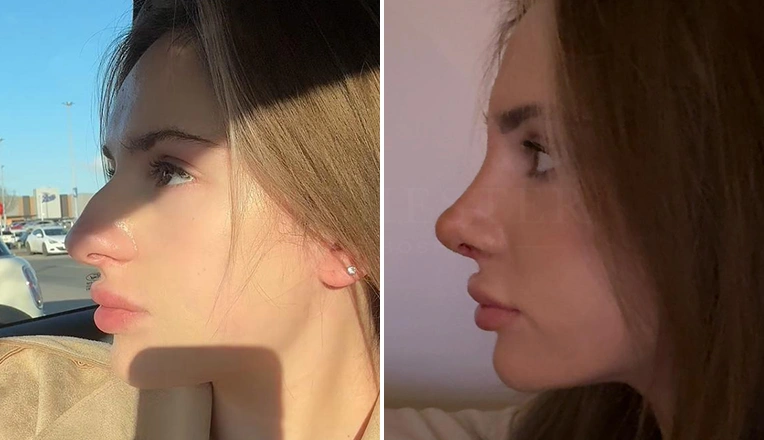
At Manchester Private Hospital, rhinoplasty consultations are personalised around your facial features, nasal structure, concerns and goals. The aim is not to create a “perfect” or overdone nose, but to achieve a natural-looking result that suits your face.
What Is a Hooked Nose?
A hooked nose usually refers to a nose with a curved, prominent or downward-sloping profile. It is often most noticeable from the side and may make the nose appear longer, stronger or more projected than the patient would like.
A hooked nose may include:
- A raised bridge or dorsal hump
- A curved side profile
- A downturned or drooping nasal tip
- A nose that appears long from the side
- A strong nasal bridge
- Imbalance between the nose, lips and chin
Some people feel their hooked nose gives character and strength to the face, while others feel it draws attention away from their other features. Rhinoplasty is a personal decision, and the right approach depends on what you want to change and what is realistically achievable.
What Causes a Hooked Nose?
A hooked nose can develop for different reasons. For many people, it is simply part of their natural facial structure and may run in the family. The shape of the nasal bones, cartilage and tip support all influence the profile of the nose.
Common causes can include:
- Genetics and natural facial development
- A prominent nasal bridge
- Cartilage shape and tip position
- Previous injury or trauma to the nose
- A broken nose that healed with a hump or curve
- Age-related changes in nasal tip support
- Previous rhinoplasty in revision cases
Understanding the cause matters because the surgical plan should be based on your anatomy rather than a standard approach.
How Can Rhinoplasty Improve a Hooked Nose?
Rhinoplasty may improve a hooked nose by reshaping the bridge, refining the tip or adjusting the overall nasal profile. The exact plan depends on whether the main concern is the dorsal hump, tip position, nasal length, bridge shape or a combination.
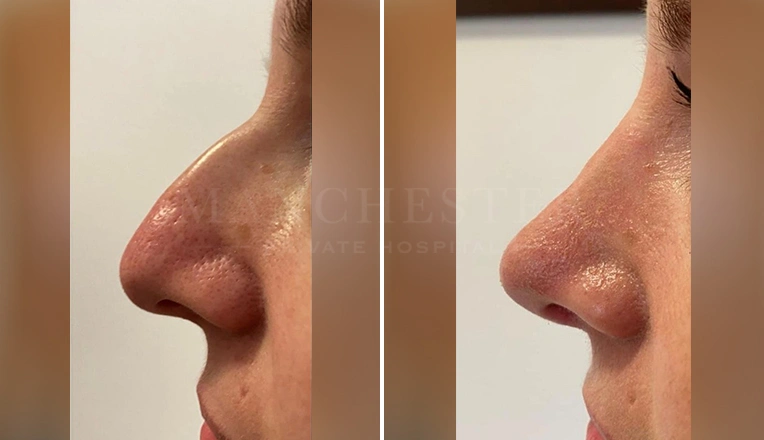
Treatment may involve:
- Reducing a prominent dorsal hump
- Refining the bridge line
- Lifting or supporting a downturned nasal tip
- Adjusting nasal length where appropriate
- Improving side profile balance
- Creating a more harmonious relationship between the nose, lips and chin
Rhinoplasty can be used to alter the hump at the bridge, reshape the tip, adjust nose length, change nostril width, reposition the nose after injury, or improve nasal airways in suitable cases.
A good result should still look like you. The goal is usually to soften the hooked appearance while keeping the nose in proportion with the rest of the face.
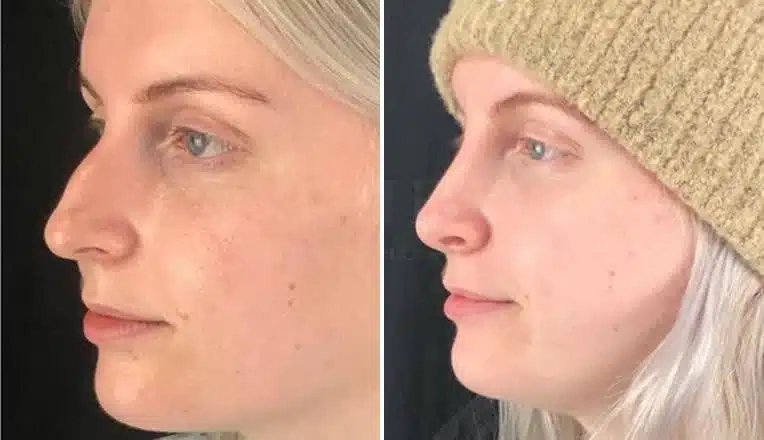
Hooked Nose Rhinoplasty Before and After Results
Before and after photos can be useful when researching hooked nose rhinoplasty because they show how changes to the bridge and tip can affect the overall side profile.
When reviewing rhinoplasty results, it can help to look at:
- Side profile changes
- Reduction of a dorsal hump
- Tip position and rotation
- Nose length and projection
- Balance between the nose, lips and chin
- Whether the result looks natural on the patient’s face
Every result is different. Skin thickness, bone structure, cartilage strength, healing response and surgical technique can all affect the final outcome. Swelling also takes time to settle, so early results may not show the final shape.
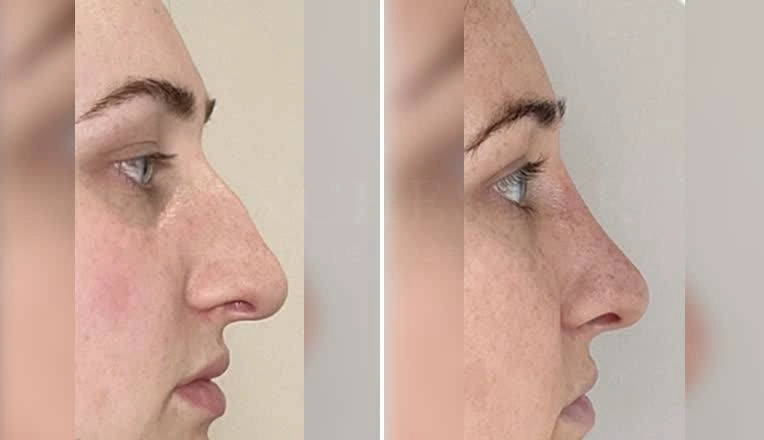
You can also view our rhinoplasty before and after photos to see how nose reshaping may improve the bridge, tip position and overall side-profile balance in suitable patients.
Am I Suitable for Hooked Nose Rhinoplasty?
You may be suitable for hooked nose rhinoplasty if you are unhappy with the side profile of your nose and want to explore whether surgery can improve its shape.
You may be suitable if:
- You have a prominent bridge or dorsal hump
- Your nasal tip appears downturned or droopy
- Your nose looks long or hooked from the side
- Your facial growth is complete
- You are in good general health
- You have realistic expectations
- You understand recovery and swelling take time
- You want a result that suits your natural face
You may not be suitable if your expectations are unrealistic, if you are looking to copy someone else’s nose, if you have untreated medical concerns, or if you are not ready for the recovery process.
During your consultation, your surgeon will assess your nose from the front, side and three-quarter view, as well as considering facial balance and any breathing concerns.
Open vs Closed Rhinoplasty for a Hooked Nose
Hooked nose rhinoplasty may be performed using an open or closed technique, depending on what needs to be corrected.
Closed rhinoplasty uses incisions inside the nostrils, so there is no visible external scar. This approach may be suitable for certain bridge or profile changes.
Open rhinoplasty involves a small incision between the nostrils, allowing the surgeon greater visibility of the nasal structure. This may be helpful when more detailed tip work or structural correction is needed.
Your surgeon will recommend the most appropriate method after examining your nose and discussing your goals.
What Happens During Hooked Nose Rhinoplasty?
Your rhinoplasty journey begins with a detailed consultation. This is where your surgeon will listen to your concerns, assess your nasal shape and explain what may or may not be achievable.
Your consultation may include:
- Discussion of your goals
- Review of medical history
- Assessment of nasal shape and facial balance
- Examination of the bridge, tip and nostrils
- Discussion of breathing symptoms, if present
- Photographs for planning where appropriate
- Explanation of surgical options, risks and recovery
The surgery itself is usually performed under anaesthetic. Nose reshaping is usually carried out under general anaesthetic, and the operation may involve removing or rearranging bone and cartilage depending on the type of correction required.
For a hooked nose, surgery may focus on reducing the dorsal hump, adjusting the bridge, refining the tip or improving the relationship between the nose and other facial features.
Can Hooked Nose Rhinoplasty Help Breathing?
Some patients seek hooked nose rhinoplasty for cosmetic reasons only. Others may also have breathing concerns, especially if the nose has been injured, the septum is deviated, or the nasal airways are restricted.
If breathing is a concern, this should be discussed during consultation. In some cases, functional correction may be considered alongside cosmetic reshaping. Septoplasty may sometimes be carried out at the same time as rhinoplasty when breathing or septum concerns are present.
Not every hooked nose causes breathing problems, and not every cosmetic rhinoplasty will involve functional correction. A proper assessment is needed to understand what is appropriate.
Recovery After Hooked Nose Rhinoplasty
Recovery after hooked nose rhinoplasty takes time, and swelling is a normal part of healing. You may notice early changes once the splint is removed, but the final result develops gradually.
In the early recovery stage, you may experience:
- Swelling around the nose
- Bruising around the eyes
- Tenderness or tightness
- Blocked or stuffy nose feeling
- Temporary numbness or stiffness
- Mild bleeding in the first few days
NHS guidance notes that patients may need up to two weeks off work after nose surgery, and that swelling can take several months to settle fully. It also advises avoiding strenuous exercise or contact sports for around four to six weeks.
Your surgeon will give you personalised aftercare instructions, including how to protect the nose, when to return to normal activities and what to avoid during healing.
Hooked Nose Rhinoplasty Results: What to Expect
The aim of hooked nose rhinoplasty is usually to create a smoother, more balanced side profile while keeping the result natural and in proportion with your face.
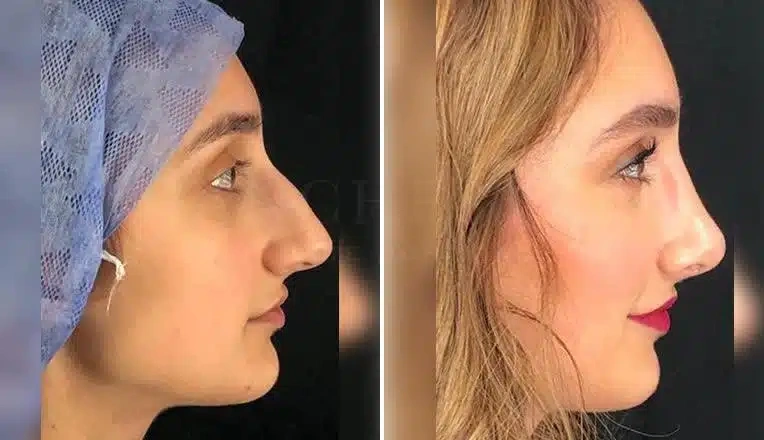 You may notice:
- A softer nasal bridge
- Less visible dorsal hump
- Improved tip position
- A more balanced side profile
- Better facial harmony
- A nose shape that feels more in line with your goals
Results are not instant. Swelling can temporarily affect the shape, especially around the tip. The final result of rhinoplasty may take 12 to 18 months to fully develop.
It is important to understand that rhinoplasty cannot guarantee perfect symmetry or a completely predictable result. Individual anatomy, skin thickness and healing response all influence the final outcome.
Hooked Nose Rhinoplasty Cost
The cost of hooked nose rhinoplasty in the UK depends on the complexity of the procedure and the treatment plan recommended after consultation.
Cost may be affected by:
- Whether bridge reduction is needed
- Whether tip reshaping is required
- Whether functional correction is included
- Open or closed rhinoplasty technique
- Primary or revision rhinoplasty
- Anaesthetic and theatre requirements
- Hospital care and aftercare
- Follow-up appointments
At Manchester Private Hospital, your quote will be personalised after your consultation, so the cost reflects your anatomy, goals and surgical plan.
Risks and Considerations
Rhinoplasty is a surgical procedure, so it is important to understand the risks and limitations before deciding to go ahead.
Possible risks and considerations may include:
- Bleeding
- Infection
- Swelling and bruising
- Numbness or stiffness
- Scarring
- Breathing changes
- Asymmetry
- Dissatisfaction with the result
- Need for revision surgery in some cases
NHS guidance states that nose reshaping is a complex operation, results cannot be guaranteed, and patients should think carefully before choosing surgery.
A thorough consultation helps you understand what can realistically be achieved and whether surgery is the right option for you.
Why Choose Manchester Private Hospital?
Manchester Private Hospital offers private cosmetic surgery consultations in Manchester with a personalised, patient-focused approach.
Patients choose MPH for:
- Private rhinoplasty consultations
- Consultant-led care
- GMC Registered experienced specialists
- Rated Excellent on Trustpilot with 1700+ Reviews
- Rated Good on CQC
- Rated 4.9 on Doctify
- Easy Finance Options
Your consultation is designed to give you honest advice, clear information and a realistic understanding of what hooked nose rhinoplasty may achieve.
Frequently Asked Questions
Hooked nose rhinoplasty is nose reshaping surgery designed to improve a curved or prominent nasal profile. It may involve reducing a dorsal hump, refining the bridge or adjusting a downturned nasal tip.
Rhinoplasty may improve the appearance of a hooked nose in suitable patients. The result depends on your nasal structure, skin thickness, facial balance and healing response.
A hooked nose can be caused by genetics, natural bone and cartilage structure, previous injury, ageing changes or previous surgery.
Yes, a dorsal hump can often be reduced with rhinoplasty.
Yes, rhinoplasty can sometimes adjust or support a droopy nasal tip. The technique depends on the cartilage structure and the overall nasal shape.
Yes, hooked nose rhinoplasty is often focused on improving the side profile by refining the bridge, tip and nasal projection.
There is no single best option for everyone. Closed rhinoplasty may be suitable for some patients, while open rhinoplasty may be recommended when more detailed tip or structural work is needed.
Many patients need around two weeks off work, but swelling can take several months to settle. Final refinement may take longer, especially around the nasal tip.
The aim is to create a result that looks balanced with your face. Your surgeon will discuss what is realistic based on your anatomy and goals.
The cost depends on the complexity of surgery, whether bridge or tip work is needed, and whether functional correction is required. A personalised quote is provided after consultation.
Book a FREE Hooked Nose Rhinoplasty Consultation
Every nose is different, and every patient has different goals. If you are concerned about a hooked nose, prominent bridge, dorsal hump or downturned nasal tip, a private consultation can help you understand your options.
At Manchester Private Hospital, your surgeon will assess your nasal structure, side profile, facial balance and any breathing concerns before recommending a personalised treatment plan.